
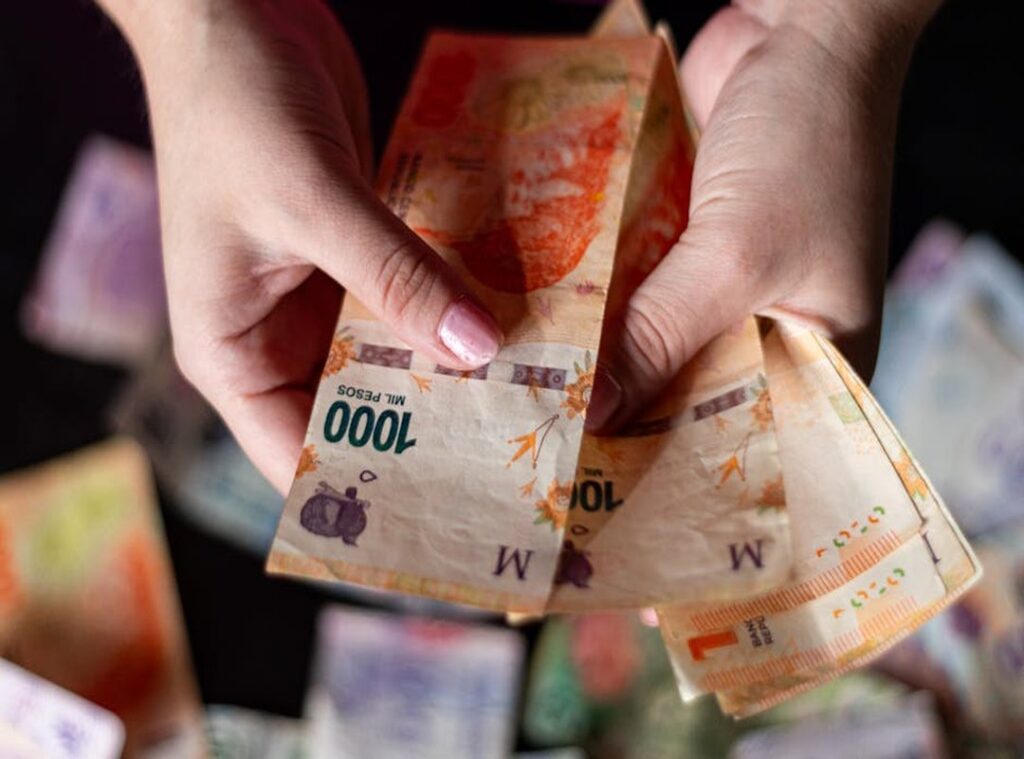
Ever wondered about the connection between 6000 uf and pesos chilenos? It’s a bit of an odd comparison, but it’s fascinating. I’m here to break it down for you.
You might be thinking, why would anyone need this? Well, sometimes we just get curious about unusual things. And that’s okay.
I’ll make sure to keep it simple and practical. No fancy terms or complicated math. Just straightforward, reliable information.
So, let’s dive in and figure out what 6000 uf a pesos chilenos really means.
Understanding Microfarads
Let’s get to it. A microfarad is a unit of measurement for electrical capacitance. It’s like a tiny bucket that can hold a specific amount of electrical charge.
Capacitance, in simple terms, is the ability to store electrical energy. Think of it as a battery, but for short-term storage.
Now, why do we need microfarads? They’re used in all sorts of electronic devices. For example, in capacitors, which are components that temporarily store and release electrical energy.
You might find them in your phone, computer, or even in your car. They help smooth out power supplies, filter out noise, and stabilize voltages.
One common use is in electronic circuits. These little guys make sure your gadgets work smoothly without any hiccups.
Here’s a real-world example: 6000 uf a pesos chilenos. That’s a lot of capacitance! But in practical terms, it means a capacitor that can store a significant amount of charge, useful in high-power applications like audio amplifiers or power supplies.
So, next time you see “microfarad” on a gadget, you’ll know it’s there to keep things running smoothly.
Understanding Chilean Pesos (CLP)
The Chilean peso, or CLP, is the official currency of Chile. It’s a big part of the country’s economy and daily life.
When it comes to exchange rates, the CLP can vary quite a bit. Right now, 1 USD is worth around 800 CLP, and 1 EUR is about 900 CLP. These numbers change, so it’s good to check the latest rates if you’re planning a trip or making a financial move.
Understanding these rates helps you make better decisions, whether you’re traveling or investing. For example, 6000 uf a pesos chilenos might sound like a lot, but it’s actually just a small amount in USD or EUR.
Knowing the value of the CLP against major currencies can save you from overpaying or underestimating your budget. Keep an eye on the rates, and you’ll be in a better position to manage your money effectively.
The Conversion Process: 6000 Microfarads to Chilean Pesos
Let me start with a quick story. A few weeks back, I was helping a friend convert some unusual units for a project. It was a bit of a head-scratcher, but we figured it out.
First things first. You need to understand that microfarads (uf) and Chilean pesos (CLP) are completely different units. Microfarads measure capacitance, while pesos are a currency.
There’s no direct conversion between them.
So, how do you even begin? Well, you need an intermediate step. Typically, you’d convert the microfarads to a more common unit, like farads, and then find a way to relate that to a currency.
But in this case, it’s more about understanding the context.
In practical terms, if you’re dealing with 6000 uf a pesos chilenos, you might be looking at a specific rate or value set by a particular system or agreement. For example, if a company decides that 1 microfarad is worth 2 CLP, then 6000 microfarads would be 12,000 CLP.
To make it clearer, let’s say you have a capacitor with 6000 microfarads, and you need to buy it in Chile. If the price is set at 2 CLP per microfarad, you’d need 12,000 CLP to buy it.
This might seem a bit abstract, but it’s all about the context. If you’re unsure, always check with a reliable source.
For more detailed financial insights, you can visit Ftasiafinance. They provide a lot of useful information on these kinds of conversions and more.
Why This Conversion Matters
Start with an anecdote about how I once needed to convert 6000 uf a pesos chilenos for a friend. It was a bit of a puzzle, but it taught me a lot.
Understanding such conversions can be both fun and educational. It’s like solving a little math puzzle. You get to see how different currencies and units work together.
In real life, this knowledge can be super useful. Imagine you’re traveling in Chile and need to figure out how much something costs. Or maybe you’re dealing with financial documents that use these units.
It’s not just academic.
Knowing how to do these conversions can save you from making costly mistakes. And trust me, there’s nothing worse than realizing you miscalculated and ended up short on cash.
So, whether you’re planning a trip or handling some paperwork, having this skill can make a big difference.
Common Misconceptions and FAQs
Let’s clear up some common misconceptions about microfarads and currency conversions.
First, a microfarad is not a unit of power. It’s a unit of capacitance, which measures how much electrical charge a capacitor can store. Simple, right?
Now, onto currency conversions. Some people think it’s just a matter of multiplying by a fixed rate. But exchange rates fluctuate based on market conditions, so it’s always good to check the latest rates.
FAQs
What is a microfarad?
- A microfarad (μF) is a unit of capacitance. It tells you how much electrical charge a capacitor can hold. Think of it like a tiny bucket for electricity.
How do I convert 6000 uf a pesos chilenos?
- To convert 6000 uf (microfarads) to pesos chilenos, you need to know the current exchange rate. However, this conversion doesn’t make sense because microfarads are not a currency. If you meant to convert 6000 Chilean pesos to another currency, use an online converter or check with your bank.
Why do exchange rates change?
- Exchange rates change due to various factors like economic performance, interest rates, and political events. It’s a bit like the stock market, but for currencies.
Can I use any online converter for accurate currency conversion?
- Not all online converters are created equal. Stick to reputable sites and double-check the rates. It’s better to be safe than sorry.
Is a higher capacitance always better?
- Not necessarily. Higher capacitance means more charge storage, but it also depends on the specific application. Sometimes, a lower capacitance is what you need for a particular circuit.
I hope this clears things up. If you have more questions, feel free to ask!
Mastering Unusual Conversions
Understanding the conversion process is crucial for anyone dealing with unusual units. It bridges gaps between seemingly unrelated fields, making it easier to solve complex problems. 6000 uf a pesos chilenos might seem like an odd conversion, but it’s a perfect example of how knowledge in both electrical and financial domains can intersect.
You now have a clear and practical guide at your fingertips. This not only simplifies the task but also opens up new possibilities for applying similar conversions in other contexts.
Dive deeper into the world of electrical units and currency conversions. The more you learn, the better equipped you’ll be to tackle any conversion challenge that comes your way.

 Ask Maritza Wigginsams how they got into global investment strategies and you'll probably get a longer answer than you expected. The short version: Maritza started doing it, got genuinely hooked, and at some point realized they had accumulated enough hard-won knowledge that it would be a waste not to share it. So they started writing.
What makes Maritza worth reading is that they skips the obvious stuff. Nobody needs another surface-level take on Global Investment Strategies, FT-Focused Economic Trends, Finance Planning Techniques. What readers actually want is the nuance — the part that only becomes clear after you've made a few mistakes and figured out why. That's the territory Maritza operates in. The writing is direct, occasionally blunt, and always built around what's actually true rather than what sounds good in an article. They has little patience for filler, which means they's pieces tend to be denser with real information than the average post on the same subject.
Maritza doesn't write to impress anyone. They writes because they has things to say that they genuinely thinks people should hear. That motivation — basic as it sounds — produces something noticeably different from content written for clicks or word count. Readers pick up on it. The comments on Maritza's work tend to reflect that.
Ask Maritza Wigginsams how they got into global investment strategies and you'll probably get a longer answer than you expected. The short version: Maritza started doing it, got genuinely hooked, and at some point realized they had accumulated enough hard-won knowledge that it would be a waste not to share it. So they started writing.
What makes Maritza worth reading is that they skips the obvious stuff. Nobody needs another surface-level take on Global Investment Strategies, FT-Focused Economic Trends, Finance Planning Techniques. What readers actually want is the nuance — the part that only becomes clear after you've made a few mistakes and figured out why. That's the territory Maritza operates in. The writing is direct, occasionally blunt, and always built around what's actually true rather than what sounds good in an article. They has little patience for filler, which means they's pieces tend to be denser with real information than the average post on the same subject.
Maritza doesn't write to impress anyone. They writes because they has things to say that they genuinely thinks people should hear. That motivation — basic as it sounds — produces something noticeably different from content written for clicks or word count. Readers pick up on it. The comments on Maritza's work tend to reflect that.