

Asian supply chains aren’t what they were five years ago.
If you’re responsible for operations, procurement, or strategy, you’re likely feeling the pressure. Geopolitical tensions, rising labor and freight costs, regulatory shifts, and sudden disruptions have made traditional, efficiency-first models risky and outdated. What used to be predictable is now volatile—and that volatility directly impacts margins, delivery timelines, and long-term growth.
You’re here because you need clarity on how to approach asian supply chain management in this new environment. Not theory. Not recycled advice. Practical direction that reflects what’s actually happening across the region.
This guide provides a strategic framework for navigating today’s Asian supply chain landscape. Drawing on deep analysis of current market buzz, FT-focused economic trends, and the fundamental business shifts reshaping logistics across Asia, it breaks down what’s changing—and what you should do about it.
Inside, you’ll find actionable strategies and financial planning techniques to help you build a supply chain that is resilient, efficient, and cost-effective in today’s market.
Strategic Cost Control in a High-Volatility Environment
Volatility isn’t a phase—it’s the backdrop. Port congestion, labor swings, and currency shocks can quietly erode margins if you’re not actively managing them (and hoping things “settle down” isn’t a strategy).
1. Tackling Logistical Bottlenecks
Start by diversifying transport modes. For example, when West Coast U.S. ports clogged in 2021, some importers shifted from ocean freight to a sea–air combo via Dubai, cutting delays by up to two weeks despite higher per-unit costs (World Bank, 2022).
Action steps:
- Lock in partial long-term freight contracts to stabilize baseline costs.
- Use dynamic freight booking platforms to capture spot-rate dips.
- Build relationships with at least two regional ports.
Pro tip: Paying slightly more for flexible routing often costs less than a full production shutdown.
2. The Shifting Cost of Labor and Production
China’s manufacturing wages have risen steadily (National Bureau of Statistics of China), while Vietnam and Indonesia remain comparatively lower-cost hubs. However, productivity, infrastructure, and tariffs must be factored in—not just wages. A $2/hour savings means little if lead times double.
In asian supply chain management, the “China+1” strategy—adding a secondary production base—has become a practical hedge.
3. Currency Risk Management
Even a 5% currency swing can wipe out thin margins (IMF data). So:
- Use forward contracts to lock exchange rates.
- Match revenue and costs in the same currency where possible.
- Review exposures quarterly, not annually.
4. Optimizing Inventory with a Just-in-Case Model
Just-in-Time minimizes holding costs. However, Just-in-Case builds buffer stock for critical components. Holding two extra weeks of safety stock may raise warehousing costs—but it can prevent six weeks of lost revenue (ask any automaker in 2020).
Balance resilience against cost. In volatile markets, optionality is power.
Building a Resilient and Tech-Forward Supply Chain
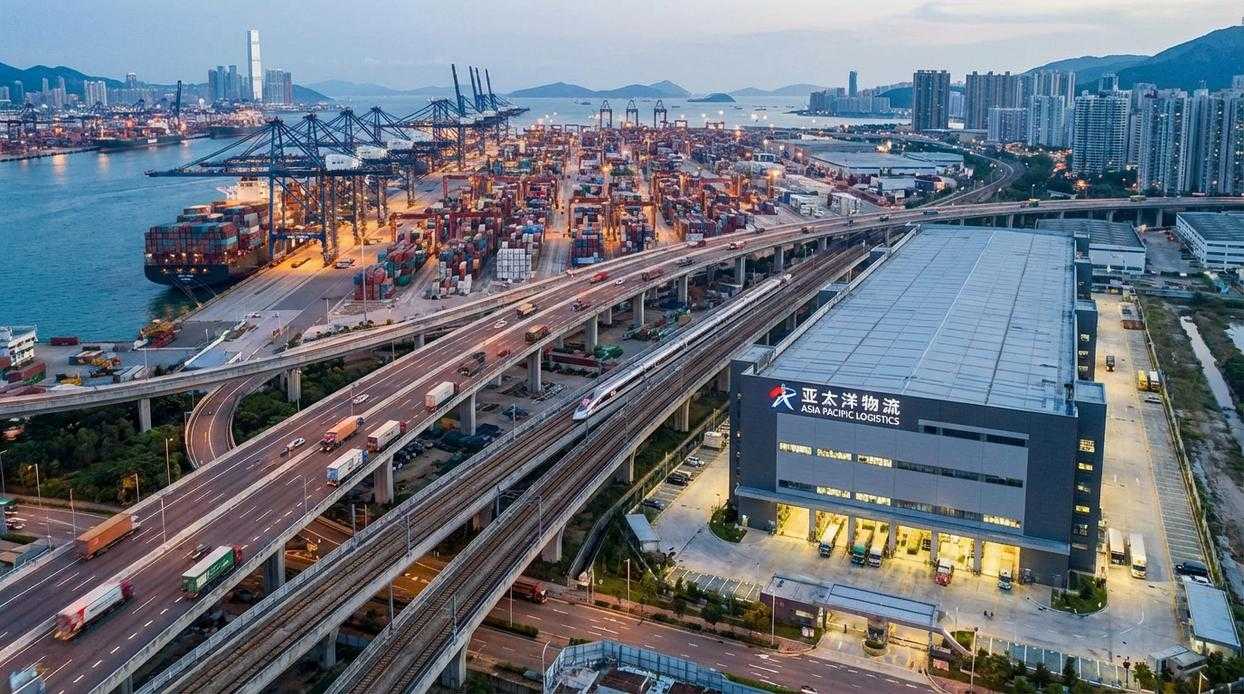
Supply chains used to run on spreadsheets and gut instinct. Today, that’s like bringing a flip phone to a 5G world. If resilience is the goal, technology is the backbone.
The Digital Backbone: Visibility Is Key
First, define the essentials. The Internet of Things (IoT) refers to physical devices embedded with sensors that transmit real-time data. In supply chains, that means tracking a shipment’s temperature, location, and condition from factory floor to final mile. According to McKinsey, end-to-end visibility can reduce supply chain costs by up to 15% (McKinsey & Company).
Meanwhile, AI-driven demand forecasting uses machine learning models to predict customer demand more accurately than historical averages alone. Amazon’s anticipatory shipping model is a classic example—products move closer to customers before they even click “buy.”
Then there’s blockchain, a distributed ledger that records transactions transparently and immutably. Walmart has used blockchain to trace food origins in seconds rather than days (Harvard Business Review). In fragmented asian supply chain management networks, that transparency is critical.
Pro tip: Start with visibility tools before advanced automation. You can’t optimize what you can’t see.
Supplier Diversification vs. Strategic Partnerships
Now, here’s the debate.
Diversification spreads risk across multiple suppliers. If one factory shuts down, others fill the gap. On paper, this seems safer. However, managing too many vendors can dilute leverage and increase coordination costs.
On the other hand, strategic partnerships deepen collaboration with fewer, reliable suppliers. Think Toyota’s keiretsu model—long-term trust, shared data, and joint problem-solving. Critics argue this creates dependency risk. They’re not wrong. But strong partnerships often mean priority treatment during shortages.
Recommendation:
- Diversify for critical components with geopolitical exposure
- Build strategic partnerships for high-volume, high-trust categories
- Regularly reassess supplier financial health
Nearshoring and Regional Hubs
Next, consider geography. Nearshoring—relocating production closer to end markets—has gained traction post-pandemic. Establishing ASEAN regional hubs reduces long-haul freight dependency and shortens lead times. DHL reports regionalization improves responsiveness and lowers transport risk (DHL Global Connectedness Report).
Admittedly, nearshoring may raise labor costs. Yet faster delivery and reduced disruption often offset the difference.
Stress-Testing Your Network
Finally, stress-test your system. Think of it as a business “fire drill.”
Ask:
- What happens if a major port closes for 30 days?
- How would a sudden tariff increase impact margins?
- Which suppliers lack backup capacity?
Map each scenario, quantify revenue exposure, and identify the weakest links. Then reinforce them—before reality forces your hand.
Resilience isn’t accidental. It’s engineered.
Sector Spotlight: Lessons from Electronics and Textiles
Let’s start with semiconductors. The chip supply chain—meaning the network of firms that design, fabricate, test, and ship microchips—is one of the most intricate in the world. Taiwan leads in advanced fabrication (TSMC), South Korea dominates memory (Samsung, SK Hynix), and Malaysia specializes in assembly and testing. Because each stage is capital-intensive and geographically concentrated, disruptions—like the 2021 global chip shortage (U.S. Department of Commerce, 2022)—cascade quickly.
Some argue concentration drives efficiency. That’s true. However, overreliance increases geopolitical and operational risk. Pro tip: map tier-two and tier-three suppliers, not just direct vendors.
Meanwhile, apparel tells a different story. Fast fashion—rapid, low-cost clothing production—faces sustainability compliance pressures (e.g., EU Strategy for Sustainable Textiles, 2022) while shifting manufacturing to Bangladesh and Vietnam for cost advantages. Speed matters, but so does traceability.
Across both sectors, the lesson is clear: diversify sourcing, invest in visibility tools, and design flexible contracts. Effective asian supply chain management balances cost, resilience, and compliance—because volatility is the only constant.
Turning Supply Chain Risk into Competitive Advantage
You came here looking for clarity on how to navigate today’s shifting Asian market. Now you have a practical roadmap to tackle the core challenges of cost pressure, operational complexity, and rising risk across your network.
The reality is simple: ignoring these structural shifts is no longer an option. Companies that delay adaptation will face higher operating costs, persistent disruptions, and gradual erosion of market share. In a region as dynamic as Asia, standing still is the fastest way to fall behind.
The path forward is proactive. Smart leaders are doubling down on diversification, accelerating technology adoption, and regionalizing operations to build resilience. Strategic asian supply chain management is no longer just defensive—it’s a competitive weapon.
Your next move starts now. Re-evaluate your supply network, identify concentration risks, and invest in the systems that improve visibility and agility. The companies that act decisively today will be the ones leading tomorrow’s Asian market.

 Ask Maritza Wigginsams how they got into global investment strategies and you'll probably get a longer answer than you expected. The short version: Maritza started doing it, got genuinely hooked, and at some point realized they had accumulated enough hard-won knowledge that it would be a waste not to share it. So they started writing.
What makes Maritza worth reading is that they skips the obvious stuff. Nobody needs another surface-level take on Global Investment Strategies, FT-Focused Economic Trends, Finance Planning Techniques. What readers actually want is the nuance — the part that only becomes clear after you've made a few mistakes and figured out why. That's the territory Maritza operates in. The writing is direct, occasionally blunt, and always built around what's actually true rather than what sounds good in an article. They has little patience for filler, which means they's pieces tend to be denser with real information than the average post on the same subject.
Maritza doesn't write to impress anyone. They writes because they has things to say that they genuinely thinks people should hear. That motivation — basic as it sounds — produces something noticeably different from content written for clicks or word count. Readers pick up on it. The comments on Maritza's work tend to reflect that.
Ask Maritza Wigginsams how they got into global investment strategies and you'll probably get a longer answer than you expected. The short version: Maritza started doing it, got genuinely hooked, and at some point realized they had accumulated enough hard-won knowledge that it would be a waste not to share it. So they started writing.
What makes Maritza worth reading is that they skips the obvious stuff. Nobody needs another surface-level take on Global Investment Strategies, FT-Focused Economic Trends, Finance Planning Techniques. What readers actually want is the nuance — the part that only becomes clear after you've made a few mistakes and figured out why. That's the territory Maritza operates in. The writing is direct, occasionally blunt, and always built around what's actually true rather than what sounds good in an article. They has little patience for filler, which means they's pieces tend to be denser with real information than the average post on the same subject.
Maritza doesn't write to impress anyone. They writes because they has things to say that they genuinely thinks people should hear. That motivation — basic as it sounds — produces something noticeably different from content written for clicks or word count. Readers pick up on it. The comments on Maritza's work tend to reflect that.