
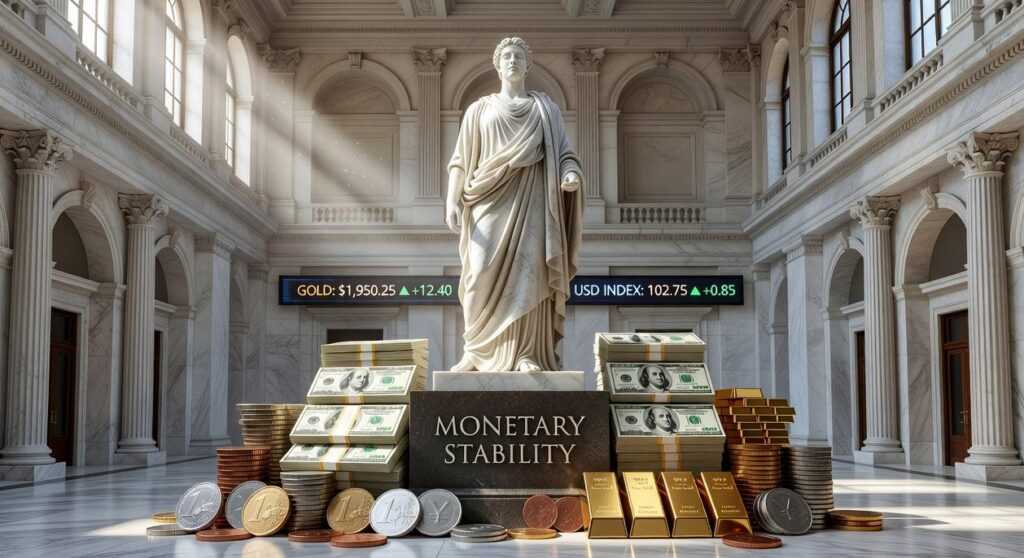
Inflation & Central Bank Policy: The Fight for Stability
As nations in the Asia-Pacific region navigate the complexities of growth, understanding the impact of major economic indicators becomes essential, a theme we explored further in our article on how these factors influence capital expenditures in “Capital Expenditures Wbinvestimize.

Inflation sounds abstract, but it shows up fast at the grocery store. The Consumer Price Index (CPI)—a measure of average price changes across a basket of goods and services—tells us how quickly purchasing power is eroding. When CPI rises 5%, your money effectively buys 5% less than it did a year ago (and yes, that includes your morning coffee).
But inflation isn’t uniform. Australia faces persistent price pressures, largely from housing and services. Tight rental markets and wage growth have kept CPI elevated, prompting the Reserve Bank of Australia (RBA) to maintain higher interest rates to cool demand. Contrast that with China, where weak consumer spending and property market stress have triggered deflationary concerns. The People’s Bank of China has leaned toward monetary easing to stimulate growth. Meanwhile, the Bank of Japan has cautiously shifted away from ultra-loose policy as domestic inflation finally ticks higher after decades of stagnation.
Some argue central banks should avoid aggressive intervention, claiming markets self-correct. History suggests otherwise—unchecked inflation can entrench expectations (see: 1970s U.S., source: Federal Reserve historical data).
So what’s next? Watch asia pacific economic indicators closely. In high-inflation environments, prioritize real assets and inflation-protected securities. In low-inflation settings, focus on yield and growth. For deeper context, review how inflation trends are influencing global markets.
Synthesizing the Data for a Clear APAC Outlook
The Asia-Pacific region moves fast. Headlines shift daily. Market sentiment can turn in hours.
But now, you have something more reliable than noise. You have a framework for interpreting the key signals behind the region’s financial health. By focusing on asia pacific economic indicators, you can see past short-term volatility and understand what’s really happening beneath the surface.
The real challenge in APAC isn’t opportunity. It’s clarity. Diverse economies, policy shifts, and global pressures make it easy to misread the market.
The solution is disciplined tracking. GDP growth. Inflation trends. Employment data. PMI readings. These fundamentals help you build a resilient global investment strategy rooted in facts—not buzz.
You came here for a clearer APAC outlook. Now you have the tools to form one.
Don’t let headlines dictate your decisions. Start applying this framework today. Follow the data, focus on fundamentals, and make informed financial moves with confidence.

 Vickie Gardnerosy is the kind of writer who genuinely cannot publish something without checking it twice. Maybe three times. They came to global investment strategies through years of hands-on work rather than theory, which means the things they writes about — Global Investment Strategies, Expert Breakdowns, Market Buzz, among other areas — are things they has actually tested, questioned, and revised opinions on more than once.
That shows in the work. Vickie's pieces tend to go a level deeper than most. Not in a way that becomes unreadable, but in a way that makes you realize you'd been missing something important. They has a habit of finding the detail that everybody else glosses over and making it the center of the story — which sounds simple, but takes a rare combination of curiosity and patience to pull off consistently. The writing never feels rushed. It feels like someone who sat with the subject long enough to actually understand it.
Outside of specific topics, what Vickie cares about most is whether the reader walks away with something useful. Not impressed. Not entertained. Useful. That's a harder bar to clear than it sounds, and they clears it more often than not — which is why readers tend to remember Vickie's articles long after they've forgotten the headline.
Vickie Gardnerosy is the kind of writer who genuinely cannot publish something without checking it twice. Maybe three times. They came to global investment strategies through years of hands-on work rather than theory, which means the things they writes about — Global Investment Strategies, Expert Breakdowns, Market Buzz, among other areas — are things they has actually tested, questioned, and revised opinions on more than once.
That shows in the work. Vickie's pieces tend to go a level deeper than most. Not in a way that becomes unreadable, but in a way that makes you realize you'd been missing something important. They has a habit of finding the detail that everybody else glosses over and making it the center of the story — which sounds simple, but takes a rare combination of curiosity and patience to pull off consistently. The writing never feels rushed. It feels like someone who sat with the subject long enough to actually understand it.
Outside of specific topics, what Vickie cares about most is whether the reader walks away with something useful. Not impressed. Not entertained. Useful. That's a harder bar to clear than it sounds, and they clears it more often than not — which is why readers tend to remember Vickie's articles long after they've forgotten the headline.