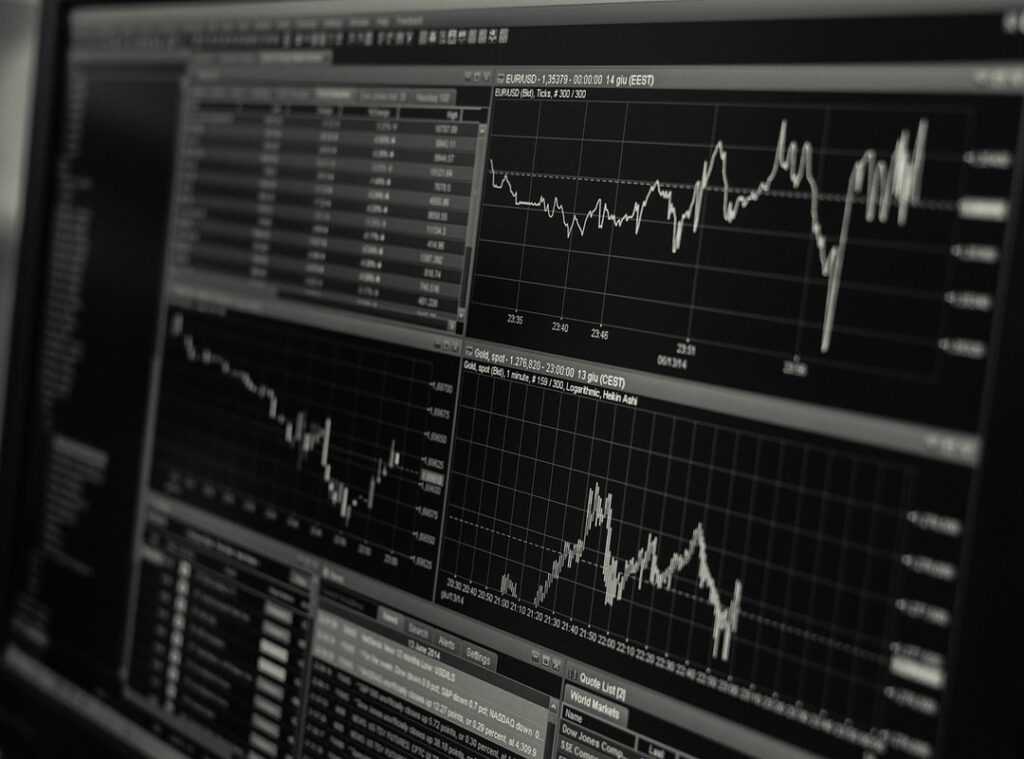
Ever sat there watching the market news, seeing your investments jump around like a toddler on a sugar high? It’s infuriating, right? The reports on inflation or GDP come out, and suddenly your portfolio takes a nosedive.
But why? Many investors feel lost, overwhelmed by the chaos of the inflation financial markets. I’ve spent years crunching numbers on global economic data and let me tell you, it doesn’t have to be this way.
I’ve seen firsthand how understanding economic reports can transform your investment plan. This isn’t some abstract theory. It’s about making real, calculated decisions.
In this article, you’ll get a clear, actionable system to link economic fluctuations to market movements.
Stop reacting out of fear. Start making strategic choices.
What Really Shakes the Markets?
Financial markets are confusing, aren’t they? They’re always looking ahead, reacting to changes in expectations. This forward-looking nature is what drives them.
Economic data acts like a crystal ball for investors. If the numbers shift, so do market sentiments.
Take the ‘Interest Rate Effect’. Picture a seesaw. When central banks hike rates, borrowing gets pricier.
This can shrink corporate profits and stock valuations. It’s not rocket science but it’s key. Lower rates do the opposite, making stocks more appealing and corporate balance sheets happier.
Now, inflation. It’s that sneaky culprit eroding profit margins and consumer power. Inflation financial markets don’t mix well when it’s unexpected.
Markets hate surprises. Expected inflation? Manageable.
Unexpected? That’s when you get chaos.
Let’s talk GDP. Think of it as the nation’s report card. Strong, sustainable growth signals healthy corporate earnings, which is great news for stocks.
If GDP contracts, though, it hints at a recession. Not what investors want to hear.
And then there’s the big wild card: geopolitical shocks. These can override the usual economic indicators in a flash. Trade wars, regional conflicts, and the like can send markets into a tizzy.
Unpredictable and solid, they’re the elephants in the room.
For those of you interested in aligning your investments with global trends, it’s worth checking out green finance sustainable investments. These are part of a growing movement. Eventually, understanding these drivers helps in navigating these tumultuous waters of financial markets.
Got it? Good.
Your Economic Dashboard: Indicators You Can’t Ignore
Investing without a dashboard is like driving blindfolded. I’ve built my own economic dashboard, and guess what? It makes a world of difference.
Let’s talk about what you need to have on yours, starting with leading indicators.
First up, the Purchasing Managers’ Index (PMI). It’s a key business activity survey. When the PMI is above 50, we’re in expansion territory.
Below 50? That’s contraction. Keep your eyes on this number; it’s like a crystal ball for economic growth.
Then there’s the Consumer Confidence Index (CCI). This one’s all about public optimism. People feeling good about the economy?
They’re likely to spend more. Simple as that. And future spending drives everything.
Remember the last time you bought a gadget just because? Multiply that by millions, and you’ve got a significant impact on economic health.
Now, let’s shift gears to coincident and lagging indicators. The Consumer Price Index (CPI) is your primary measure of inflation. How often have you heard about inflation?
Probably a lot recently. Why? Because it affects policy decisions.
Want to dive deeper into the impacts of inflation on financial markets? Check it out.
Don’t forget the Unemployment Rate. It’s a lagging indicator, sure, but a strong labor market signals strong economic health. Policymakers watch this like hawks.
You should too.
Now, for a global angle, keep an eye on China’s Caixin PMI. It’s a bellwether for global supply chains. In a connected world, what happens overseas can affect your portfolio.
There you have it. A financial GPS, if you will, for navigating inflation and financial markets. Happy investing!
Sector Rotation: Timing Your Investment Moves
Ever heard of sector rotation? It’s a plan where you move your investments from one industry to another based on the economic cycle. Sounds simple, right?

It is, and it can be solid. When the economy’s booming, cyclical sectors are where the action is. Industries like Technology, Consumer Discretionary (think travel and luxury goods), and Industrials are the stars of the show.
People have money, and they’re spending it. That’s what makes these sectors thrive.
But what happens when things slow down? During an economic contraction, it’s all about defensive sectors. Consumer Staples, Utilities, and Healthcare step up.
People still need food, power, and healthcare services. The demand doesn’t just disappear. These industries tend to hold their value better when times get tough.
Now, let’s talk about inflation. It’s a beast in the financial markets. Companies with “pricing power” can pass those increased costs on to consumers without losing their shirts.
Energy and Materials sectors often shine here. They deal with commodities, and they know how to keep those profit margins safe.
You might be wondering how this ties into the broader financial systems. Well, understanding sector rotation can give you takeaways into digital currencies financial systems. As economies shift, so do the roles of different sectors, including these new financial players.
It’s a dance, and knowing the steps can help you stay ahead. So, are you ready to make your move?
Building a Resilient Portfolio: Strategies for Volatility
When it comes to financial markets, predicting every twist and turn is a fool’s errand. I’ve learned this the hard way. The goal isn’t perfect timing.
It’s building a durable portfolio that rides out the storm. Diversifying beyond equities is the first step. Why stick to just stocks?
During economic chaos, high-quality government bonds can offer safety. They’re like a financial security blanket when fear grips the market. Commodities such as gold also play a key role (think of them as inflation insurance).
Next, focus on quality companies. What does that mean? It means choosing businesses with strong balance sheets, low debt, and consistent cash flow.
These companies stand tall during downturns. High-growth firms with no profit? They’re often the first to crumble.
Now, let’s talk about the global perspective. Too many investors fall into the trap of home country bias. That’s a mistake.
Different regions experience different economic cycles. Imagine Southeast Asia thriving while Europe slows down. That’s diversification at its best.
Finally, prioritize a long-term view. Reacting to daily headlines is a losing game. Trust me, I’ve been there.
A solid plan grounded in economic cycles is your best ally. This approach keeps you focused and prevents emotional decisions.
So, what’s the lesson here? Building a resilient portfolio isn’t about chasing the latest trend. It’s about strategic choices that withstand market volatility.
Inflation and financial markets will always be unpredictable. But with these strategies, your portfolio doesn’t have to be.
Seize Financial Control Now
The chaos of economic news can feel like a storm threatening your savings. You sense it, right? The power lies in knowledge.
By grasping the interplay of inflation financial markets, you turn fear into a weapon. When you understand these forces, you’re not just surviving. You’re thriving.
So, why wait? Dive into your portfolio now. Does it match today’s economic pulse?
Seek strategies with global reach. This isn’t just a suggestion; it’s your path to security. Act today.
Align your investments with the world. It’s time to transform uncertainty into opportunity. Take control of your financial future.

 Zyvaris Grendall writes the kind of global investment strategies content that people actually send to each other. Not because it's flashy or controversial, but because it's the sort of thing where you read it and immediately think of three people who need to see it. Zyvaris has a talent for identifying the questions that a lot of people have but haven't quite figured out how to articulate yet — and then answering them properly.
They covers a lot of ground: Global Investment Strategies, FT-Focused Economic Trends, Finance Planning Techniques, and plenty of adjacent territory that doesn't always get treated with the same seriousness. The consistency across all of it is a certain kind of respect for the reader. Zyvaris doesn't assume people are stupid, and they doesn't assume they know everything either. They writes for someone who is genuinely trying to figure something out — because that's usually who's actually reading. That assumption shapes everything from how they structures an explanation to how much background they includes before getting to the point.
Beyond the practical stuff, there's something in Zyvaris's writing that reflects a real investment in the subject — not performed enthusiasm, but the kind of sustained interest that produces insight over time. They has been paying attention to global investment strategies long enough that they notices things a more casual observer would miss. That depth shows up in the work in ways that are hard to fake.
Zyvaris Grendall writes the kind of global investment strategies content that people actually send to each other. Not because it's flashy or controversial, but because it's the sort of thing where you read it and immediately think of three people who need to see it. Zyvaris has a talent for identifying the questions that a lot of people have but haven't quite figured out how to articulate yet — and then answering them properly.
They covers a lot of ground: Global Investment Strategies, FT-Focused Economic Trends, Finance Planning Techniques, and plenty of adjacent territory that doesn't always get treated with the same seriousness. The consistency across all of it is a certain kind of respect for the reader. Zyvaris doesn't assume people are stupid, and they doesn't assume they know everything either. They writes for someone who is genuinely trying to figure something out — because that's usually who's actually reading. That assumption shapes everything from how they structures an explanation to how much background they includes before getting to the point.
Beyond the practical stuff, there's something in Zyvaris's writing that reflects a real investment in the subject — not performed enthusiasm, but the kind of sustained interest that produces insight over time. They has been paying attention to global investment strategies long enough that they notices things a more casual observer would miss. That depth shows up in the work in ways that are hard to fake.