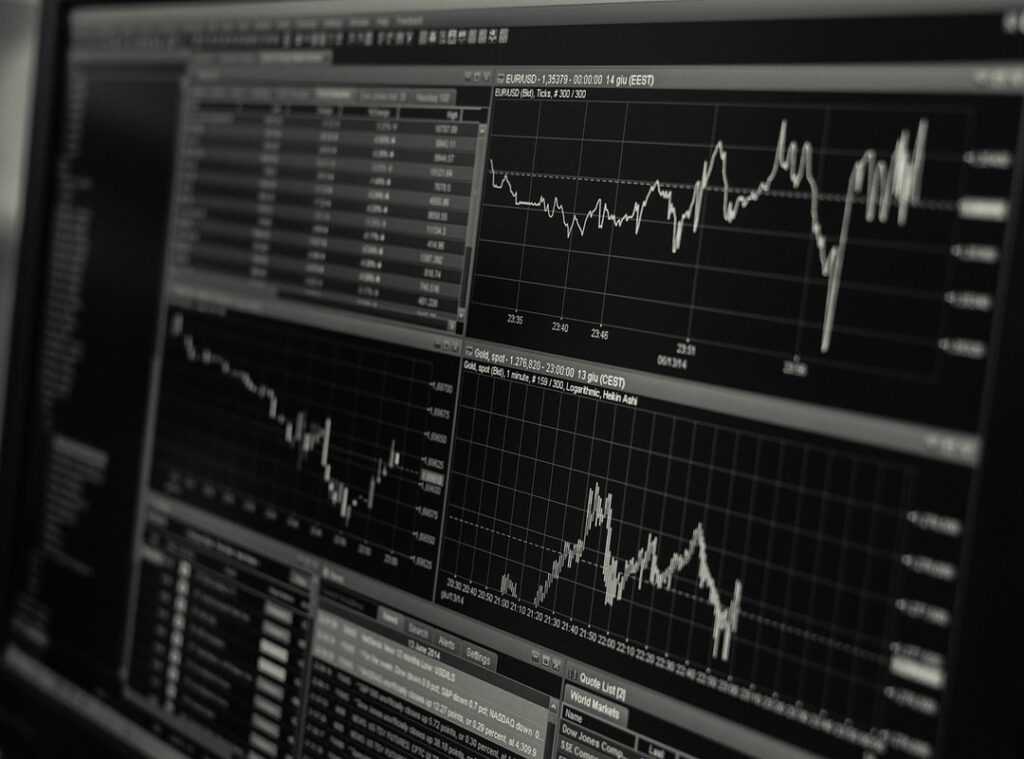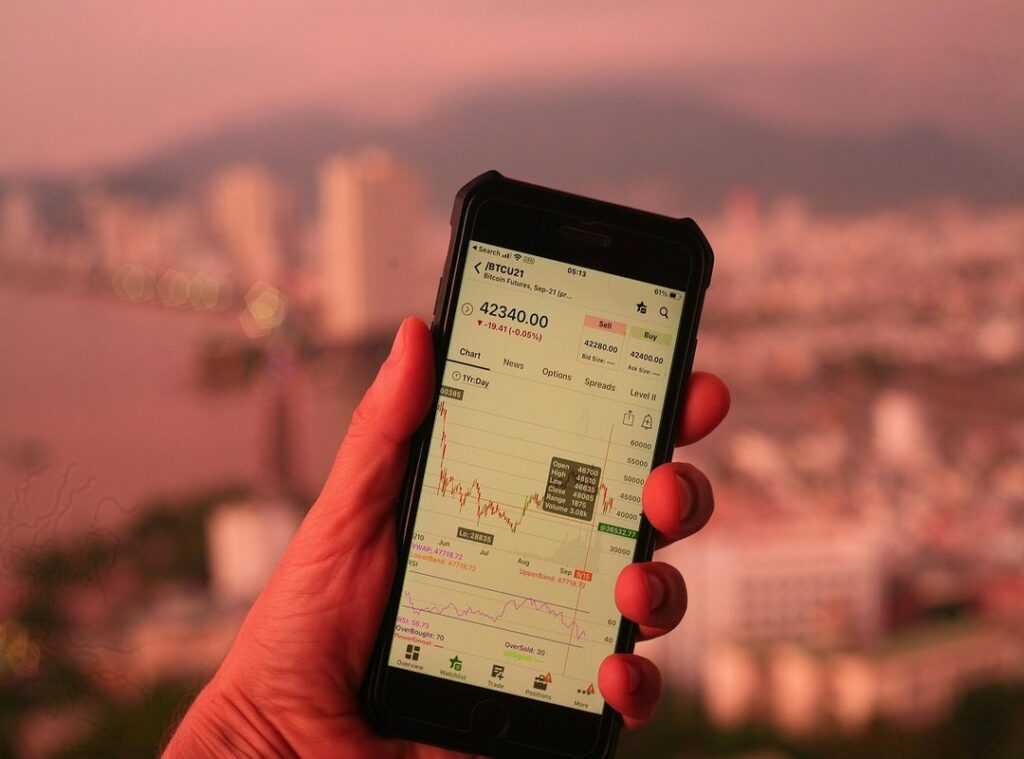

Watching global markets, especially Asia, can feel like staring into chaos. The uncertainty is palpable, right? You’re not alone if you’re scratching your head over what comes next.
I’ve been digging into the labyrinth of economic trends and investment strategies for years. And here’s the thing: AI financial forecasting is changing the game. It’s like having a reliable compass in a storm.
Investors are peeling back the layers of noise with this tool, seeing what others miss. But how does this magic work? That’s what I’m here to break down for you.
Let’s cut through the jargon. By the end, you’ll understand what this technology is, how it really operates, and most importantly, what it means for your investments.
AI Financial Forecasting: The Economic Crystal Ball
Let’s talk about AI-driven financial predictions. Think of it like a super-smart weather forecast for the economy. Only instead of predicting rain, we’re forecasting stocks, commodities, and currency fluctuations without ever getting wet.
Traditional financial analysis is the old-school method. You know, humans with calculators, reading reports, making educated guesses based on history and intuition. But AI?
It’s a whole different beast. Machines dive into a sea of data (news) articles, social media, obscure economic reports (and) churn it all in seconds flat. It’s like comparing a snail to a jet.
Why is AI better at this? Simple. It’s about speed and scale.
AI can process more data in minutes than a human team could in weeks. Imagine a human analyst reading a company’s earnings report. Meanwhile, an AI reads that report and a million tweets about the company’s new product at the same time.
Who’s getting a broader view? (Hint: It’s not the human.)
But here’s the thing: AI is not a crystal ball. It identifies patterns and probabilities. It doesn’t promise the future.
It’s like spotting ripples on water (an) insight into what’s happening beneath the surface, not a guarantee of what’s to come.
Curious about how these patterns and probabilities work in practice? Check out this resource on analyzing future trading economic indicators. It’s a step into understanding how AI taps into data like never before.
So, will AI replace human analysts entirely? Probably not. But it’s certainly reshaping the space of financial forecasting.
The AI ‘Brain’: Teaching Machines to Predict
AI financial forecasting is like teaching a dog new tricks, but with a twist. Imagine showing your dog the same trick a million times until it gets it right. That’s machine learning in a nutshell.
We train these models by feeding them mountains of data: stock prices, trading volumes, global news, corporate filings, and even satellite images of shipping ports (yes, even outer space gets involved).
The AI’s job? Recognize patterns and make predictions. Think of it like a streaming service that learns your taste in movies.
It notices you watch rom-coms on rainy days. So, it starts suggesting more of them when storms hit. AI does the same for financial assets, predicting trends based on past behavior.
Training the model is like a never-ending game of trial and error. The AI makes a forecast, then checks how it did against reality. Did it predict the stock market surge or flub it completely?
This constant refining helps it get better and better. It’s a process that’s as constant as it is fascinating. And let’s be honest, who doesn’t want a little accuracy in their financial forecasts?
Now, where does this leave us? Right in the heart of the future of finance: ai in. AI is changing the game.
Just like a coach who knows your strengths, it helps get through complex financial landscapes. It’s not perfect (yet), but it’s getting closer every day. And that’s something worth paying attention to.
The Big Wins vs. The Real Risks: Friend or Foe?
AI financial forecasting. Sounds like a game-changer, right? It’s got some big wins up its sleeve.

First, there’s the speed. AI can react to market news in microseconds. That’s faster than any human could dream of.
Then you’ve got scale. AI can analyze thousands of assets at once. Humans?
Not a chance. And let’s not forget objectivity. AI makes decisions without human emotions like fear and greed getting in the way.
But hold on. Before we get too excited, let’s talk about the real risks. AI isn’t perfect.
Ever heard of the ‘Black Box’ problem? Sometimes, we don’t even know why AI makes specific predictions. It’s like trying to figure out why your cat’s knocking over a glass of water.
Then there’s “Garbage In, Garbage Out.” If the data fed into the AI is junk, the predictions will be junk too. It’s that simple.
And let’s not ignore the big one: unpredictable ‘Black Swan’ events. Remember the 2008 financial crisis? AI struggles with events that have no historical precedent.
It’s not a crystal ball, much as we might wish it were.
Now, you might be thinking, “Where does this leave us?” Is AI a friend or a foe? Honestly, it’s both. It’s a solid tool, but it needs careful handling.
Like a chainsaw. Useful, but you wouldn’t hand it to a toddler.
Speaking of careful handling, how AI can contribute to Green Finance Sustainable Investments. It can help us get through sustainable options without the usual emotional biases.
So, what’s the takeaway? AI in financial forecasting is a wild ride. Embrace the advantages, but don’t ignore the risks.
Keep your eyes open, ask questions, and stay informed. As the world of finance evolves, so must we.
AI’s Market Impact: Personal Strategies That Work
AI financial forecasting isn’t just a buzzword; it’s reshaping how we invest, especially in the booming Asian markets. Wondering how this affects your personal investments? Let me break it down.
AI is a game-changer for spotting trends in fast-growing economies like Vietnam and Indonesia. These countries are on the rise, and AI can pinpoint those subtle economic shifts that human eyes might miss. For example, imagine using AI to predict currency fluctuations.
You’d have a better handle on when to buy or sell international stocks, right? It’s like having insider knowledge without the legal issues (not that I’d suggest those anyway).
But here’s the kicker: you don’t need to build your own AI to benefit. Many investment platforms now use AI to offer takeaways and predictions. The key?
Look for platforms that are transparent about their AI use. If they’re open about their data sources and methods, that’s a good sign you won’t be flying blind.
You might ask, how practical is this for individual investors like you and me? Very. AI tools are becoming more accessible, and as they do, they’ll help us make smarter decisions.
It’s not about jumping on every tech bandwagon but using the right tools wisely.
Pro tip: Next time you evaluate an investment platform, check if they use AI and how. It could be the edge you need in an unpredictable market.
Smart Moves in an AI-Powered World
You’ve got it now. AI financial forecasting isn’t a magic solution, but it sure cuts through the financial fog. You’re ready to blend tech with your judgment and clear goals. It’s about making smarter choices, not just quicker ones.
So, what’s the next step?
Dive deeper. Explore modern investment strategies and global market trends. The more you learn, the better your decisions will be.
You’ve started the journey (don’t) stop now. Check out more takeaways and arm yourself with knowledge. The world of finance waits for no one.
Get ahead, stay ahead. Visit more articles and keep building your edge.

 Vickie Gardnerosy is the kind of writer who genuinely cannot publish something without checking it twice. Maybe three times. They came to global investment strategies through years of hands-on work rather than theory, which means the things they writes about — Global Investment Strategies, Expert Breakdowns, Market Buzz, among other areas — are things they has actually tested, questioned, and revised opinions on more than once.
That shows in the work. Vickie's pieces tend to go a level deeper than most. Not in a way that becomes unreadable, but in a way that makes you realize you'd been missing something important. They has a habit of finding the detail that everybody else glosses over and making it the center of the story — which sounds simple, but takes a rare combination of curiosity and patience to pull off consistently. The writing never feels rushed. It feels like someone who sat with the subject long enough to actually understand it.
Outside of specific topics, what Vickie cares about most is whether the reader walks away with something useful. Not impressed. Not entertained. Useful. That's a harder bar to clear than it sounds, and they clears it more often than not — which is why readers tend to remember Vickie's articles long after they've forgotten the headline.
Vickie Gardnerosy is the kind of writer who genuinely cannot publish something without checking it twice. Maybe three times. They came to global investment strategies through years of hands-on work rather than theory, which means the things they writes about — Global Investment Strategies, Expert Breakdowns, Market Buzz, among other areas — are things they has actually tested, questioned, and revised opinions on more than once.
That shows in the work. Vickie's pieces tend to go a level deeper than most. Not in a way that becomes unreadable, but in a way that makes you realize you'd been missing something important. They has a habit of finding the detail that everybody else glosses over and making it the center of the story — which sounds simple, but takes a rare combination of curiosity and patience to pull off consistently. The writing never feels rushed. It feels like someone who sat with the subject long enough to actually understand it.
Outside of specific topics, what Vickie cares about most is whether the reader walks away with something useful. Not impressed. Not entertained. Useful. That's a harder bar to clear than it sounds, and they clears it more often than not — which is why readers tend to remember Vickie's articles long after they've forgotten the headline.