

Small and medium enterprises are the backbone of growth across Asia, yet understanding the real opportunities and risks surrounding smes in asian economies isn’t always straightforward. If you’re here, you’re likely looking for clear, actionable insights into how these businesses are shaping regional markets, influencing investment trends, and driving long-term economic expansion.
This article breaks down the fundamentals behind smes in asian economies, from their role in GDP growth and employment to the structural challenges they face in financing, digital transformation, and cross-border trade. We focus on what matters most to investors, entrepreneurs, and policy observers: where the momentum is building, which sectors show resilience, and how macroeconomic shifts are impacting smaller enterprises.
Our analysis draws on current market data, regional economic reports, and established finance frameworks to provide grounded, practical insight—not speculation. By the end, you’ll have a clearer understanding of how these enterprises influence Asia’s economic trajectory and where strategic opportunities may lie.
Quantifying the Impact: SMEs by the Numbers
The Backbone of Employment
Small and medium-sized enterprises (SMEs)—defined as businesses with limited revenue and employee counts compared to large corporations—employ over 60% of the workforce across ASEAN economies, according to ASEAN Secretariat data. India reports similar figures, with MSMEs accounting for about 45% of employment directly and far more indirectly (Government of India). South Korea’s SMEs represent roughly 81% of total employment (OECD). These aren’t fringe contributors; they are the labor engine. When policymakers debate stimulus or credit access, they are often really debating the future of jobs. That said, measurement gaps remain in informal sectors, so exact totals may understate their true reach.
Contribution to GDP
Across developing Asian nations, SMEs contribute between 40% and 60% of GDP (Asian Development Bank). That range is wide—and admittedly, methodologies differ by country—but the pattern is consistent: smes in asian economies form a substantial share of national output. Critics argue large conglomerates drive exports and therefore matter more. There’s truth there. Yet GDP diversity reduces systemic risk (think of it as not putting all your economic eggs in one basket).
A Catalyst for Innovation
SMEs are typically more agile—meaning they adapt quickly to market shifts. They experiment, localize products, and diversify supply chains. Agility is their competitive edge. Pro tip: watch credit growth to SMEs; it often signals future innovation cycles.
Case Study Spotlight
Vietnam’s manufacturing SMEs anchor global supply chains, especially in electronics assembly. Singapore, by contrast, fosters tech-focused SMEs in fintech and biotech. Different models, same impact—though which model proves more resilient long term remains an open question.
Digital Transformation and Supply Chain Integration
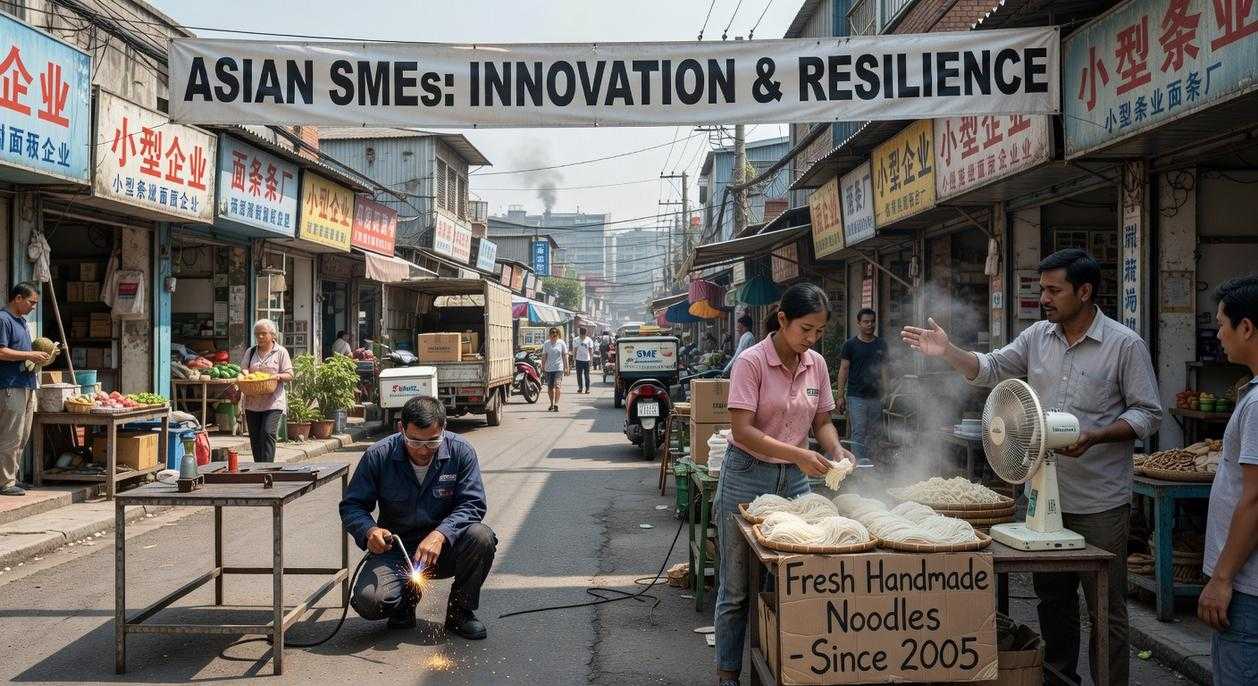
A few years ago, I met a small furniture exporter in Cebu who told me his “international expansion strategy” was a smartphone and a stable Wi‑Fi connection. Within months, his products were selling to buyers in Singapore and Australia through online marketplaces. That’s the power of digital transformation—using cloud-based tools, e-commerce platforms, and data systems to modernize operations without massive upfront costs.
The E-commerce Boom
Digital platforms have dramatically lowered barriers to entry. In Indonesia and the Philippines, SMEs can now:
- List products on regional marketplaces
- Accept cross-border digital payments
- Run targeted social media ads
Instead of investing in physical storefronts, they scale through logistics partnerships and fulfillment centers. Critics argue that competition on these platforms squeezes margins. That’s true to a point (price wars are real). But access to millions of customers often outweighs thinner margins—especially for niche or high-quality producers.
Plugging into Global Supply Chains
I’ve also seen manufacturers in Vietnam pivot from local subcontracting to supplying components for multinational electronics firms. By meeting compliance and quality standards, smes in asian economies are embedding themselves into automotive and semiconductor value chains. Becoming a component supplier—a firm that produces specialized parts used in larger products—creates stable, recurring demand.
Of course, some worry about overdependence on global giants. That’s fair. Yet integration often brings technology transfer and operational discipline that strengthen long-term competitiveness.
Fintech as an Enabler
Traditional banks once viewed small firms as too risky. Fintech—technology-driven financial services—has changed that. Micro-loans, digital wallets, and revenue-based financing now bridge funding gaps. In fact, regulatory clarity has accelerated adoption in many markets, making navigating regulatory environments in major asian economies essential for sustainable growth.
The result? Faster payments, better cash flow visibility, and scalable capital—fueling the next wave of regional expansion.
Navigating the Headwinds: Key Challenges to Growth
Across Asia, growth stories often spotlight unicorns, yet the harder narrative is how smaller firms survive structural constraints. The most persistent barrier is the capital gap: traditional banks demand collateral and lengthy track records, while venture capital clusters around late-stage tech hubs. According to the Asian Development Bank, financing shortfalls for smes in asian economies exceed $5 trillion, leaving viable exporters underfunded. Competitors cite the gap; fewer unpack its ripple effects: stalled digitalization, weak supplier bargaining power, and slower ESG adoption.
Regulation compounds the strain. Fragmented compliance regimes—from licensing to cross-border tax rules—increase costs and deter formalization. In Indonesia and India, World Bank surveys show firms spending weeks on paperwork, time not spent innovating.
Talent is the third fault line. Skills scarcity in AI, advanced manufacturing, and fintech pushes wages beyond SME reach. Large corporates offer brand prestige and stock options; smaller firms must counter with agility and purpose (yes, culture matters).
| Challenge | Hidden Impact | Strategic Angle |
|—|—|—|
|Capital Gap| Innovation delay| Blended finance models |
|Regulation| Informality trap| Regional harmonization |
|Talent| Productivity ceiling| Cross-border remote hiring |
Addressing these headwinds demands policy reform, capital stacks, and workforce partnerships.
Two years ago, I nearly overlooked a small logistics firm because its balance sheet looked ordinary. After visiting its warehouse, I saw relentless domestic demand and new export contracts stacking up. That lesson shapes how I assess undervalued opportunities today.
Look for:
- Sectors tied to essential local consumption
- Clear pathways to regional exports
- Prudent cash management
Government tax credits and SME loan guarantees have de-risked expansion for smes in asian economies, encouraging formalization and scale. Some argue subsidies distort markets; my experience shows targeted incentives crowd in private capital. Finally, ESG metrics increasingly determine cross-border funding and partnerships for growth.
Turning Insight Into Action for smes in asian economies
You came here looking for clarity on how shifting market forces, funding conditions, and policy trends impact smes in asian economies—and now you have a sharper understanding of the risks, opportunities, and strategies that matter most.
The reality is that many small and mid-sized businesses struggle with limited access to capital, volatile market conditions, and uncertainty around cross-border growth. Without reliable insights and a structured financial approach, growth stalls and opportunities pass by.
The good news? With the right market intelligence, disciplined financial planning, and awareness of FT-focused economic trends, you can position your business or portfolio to adapt and scale with confidence.
Now it’s time to act. Stay ahead of market buzz, refine your investment strategy, and apply proven financial planning techniques designed for smes in asian economies. Get the insights you need today and make your next move with confidence—because informed decisions create lasting growth.

 Zyvaris Grendall writes the kind of global investment strategies content that people actually send to each other. Not because it's flashy or controversial, but because it's the sort of thing where you read it and immediately think of three people who need to see it. Zyvaris has a talent for identifying the questions that a lot of people have but haven't quite figured out how to articulate yet — and then answering them properly.
They covers a lot of ground: Global Investment Strategies, FT-Focused Economic Trends, Finance Planning Techniques, and plenty of adjacent territory that doesn't always get treated with the same seriousness. The consistency across all of it is a certain kind of respect for the reader. Zyvaris doesn't assume people are stupid, and they doesn't assume they know everything either. They writes for someone who is genuinely trying to figure something out — because that's usually who's actually reading. That assumption shapes everything from how they structures an explanation to how much background they includes before getting to the point.
Beyond the practical stuff, there's something in Zyvaris's writing that reflects a real investment in the subject — not performed enthusiasm, but the kind of sustained interest that produces insight over time. They has been paying attention to global investment strategies long enough that they notices things a more casual observer would miss. That depth shows up in the work in ways that are hard to fake.
Zyvaris Grendall writes the kind of global investment strategies content that people actually send to each other. Not because it's flashy or controversial, but because it's the sort of thing where you read it and immediately think of three people who need to see it. Zyvaris has a talent for identifying the questions that a lot of people have but haven't quite figured out how to articulate yet — and then answering them properly.
They covers a lot of ground: Global Investment Strategies, FT-Focused Economic Trends, Finance Planning Techniques, and plenty of adjacent territory that doesn't always get treated with the same seriousness. The consistency across all of it is a certain kind of respect for the reader. Zyvaris doesn't assume people are stupid, and they doesn't assume they know everything either. They writes for someone who is genuinely trying to figure something out — because that's usually who's actually reading. That assumption shapes everything from how they structures an explanation to how much background they includes before getting to the point.
Beyond the practical stuff, there's something in Zyvaris's writing that reflects a real investment in the subject — not performed enthusiasm, but the kind of sustained interest that produces insight over time. They has been paying attention to global investment strategies long enough that they notices things a more casual observer would miss. That depth shows up in the work in ways that are hard to fake.